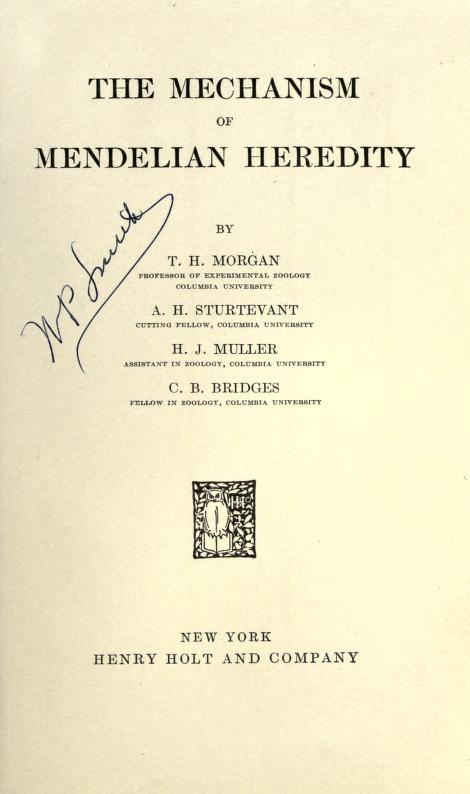
In 1953, Guido Pontecorvo (1907-1999) published a 97 pages article in Advances in Genetics called “The Genetics of Aspergillus nidulans” (see CLASSICS). Pontecorvo had become interested in the problem of the divisibility of the gene during his Ph. D. supervised in Edinburgh by Hermann Joseph Muller (1890-1967). It is worth telling how the encounter of these two scientists came about, as it is a paradigmatic illustration of the political storms of the first half of the 20th century. Muller, one of the “kids” of Morgan’s Drosophila lab, was of a left political persuasion, had to leave Berlin when the Nazis came to power, and relocated to Leningrad (now St. Petersburg) and then Moscow. He was invited by Vavilov, a distinguished Soviet geneticist, destined to eventually disappear in a Gulag. Disenchantment with the Soviet regimen, the rising of Lissenko (who pushed the inheritance of acquired characters, which was deemed politically correct by Stalin, while “Medelism-Morganism” was deemed a bourgeois ideology), with the concomitant falling of grace of Valilov, led him to leave the Soviet Union, which was not simple. He managed by volunteering as a paramedic for the Republican side in the Spanish civil war, and after the defeat of the Republicans he managed to reach Edinburgh. Pontecorvo had a degree in agronomy and was working as a cattle breeder in his native Italy, when in 1938 he was dismissed from his post as a result of the fascist anti-Semitic laws, which excluded Jews from, among other places, all state employment. He went to Edinburgh to continue to work on cattle, except that there he met Muller, who convinced him to do Ph.D. under his supervision. This work (using Drosophila melanogaster) elicited Pontecorvo’s interest in the nature of the gene and whether intragenic recombination could occur. The genetics of Aspergillus nidulans was developed to test this possibility. It is of some interest that Pontcorvo was quite open about which system to develop, and did not aimed specifically at a eukaryotic system. We should perhaps detail what are the possibilities of this novel genetics system, based on the 1953 article and on subsequent articles together or by Etta Kaffer. In its normal vegetative state A. nidulans is haploid and its conidiospores are mononucleated. It is possible using the appropriate media to plate a few hundred colonies in one Petri dish. Thus recessive mutations, including all kinds of auxotrophc and recessive lethal ones can be identified. It is homothallic, which is in fact an advantage, as any strain can be crossed to any other, provided suitable forcing markers are used. Heterokaryons can be obtained which allow the detection of cytoplasmically inherited mutations (such, but not only, those affecting the mitochondrial genome). Stable vegetative diploids can be readily obtained, allowing rigorous tests of dominance and complementation and to map mutations in relation to the centromere using mitotic recombination. This procedure, called the parasexual cycle, can also be applied to a number of fungi where meiosis is unknown. Meiotic events in each fruiting body (cleistothecia) derive from one single fertilisation event, leading to as many as 100.00 ascospores, thus it is possible to fine structure map any given gene or genetic region and carry out cis/trans tests. In my own work I have separated mutations eleven base pairs apart, which for a eukaryote is really not bad (not matching however Yanofsky’s work with Escherichia coli, which obtained recombinants of mutations within the same codon). It is this last property which allowed Alan Roper, Bob Pritchard and Obaid Siddiqui to demonstrate the divisibility of three different genes. Once Pontecorvo’s aim was achieved he forsook A. nidulans and pioneered the application of the parasexual cycle to mammalian cells in culture. It could be argued that in the late 50s and early sixties no other eukaryotic organism could match A. nidulans as to the range of classical genetic techniques available.


The exploitation of the A. nidulans genetic system came about through the independent work of three schools. Cove and Pateman initiated the study of the control of gene expression in a number of metabolic pathways. Thus, mutants in transcription factors mediating the specific induction of a number of pathways together with the identification of “wide domain” factors regulating carbon and nitrogen utilisation and response to pH were identified. Bill Timberlake, building on the earlier genetic work of John Clutterbuck (himself a student of Alan Roper) dissected the genetic control of conidiation. Ron Morris isolated conditional mutants in all steps of the cell cycle including those effecting nuclear migration, thus complementing the Nobel prize winning work of Lee Hartwell (with Saccharomyces cerevisiæ) and Paul Nurse (with Schizosaccharomyces pombe). Most, if not all extant work, with A. nidulans derive directly or indirectly from the approaches of this three schools.
From the mid-eighties onwards, through the work of several groups, reverse genetics became possible, thus any gene could be cloned, inactivated, mutated and overexpressed. The complete genome of the organism was obtained in 2003, almost 50 years to the date of the publication of Pontecorvo’s review and was followed by a number of transcriptomic studies. Thus, all the previous genetic work could be now put on a molecular footing and the possibility of tagging any gene product with a fluorescent protein meant that A. nidulans could became also a superb model to study all aspects of cell biology including intracellular trafficking.

 European Conferences on Fungal Genetics
Leave a comment