
Luis M. Corrochano
Professor of Genetics
University of Seville, Spain

Why Neurospora?
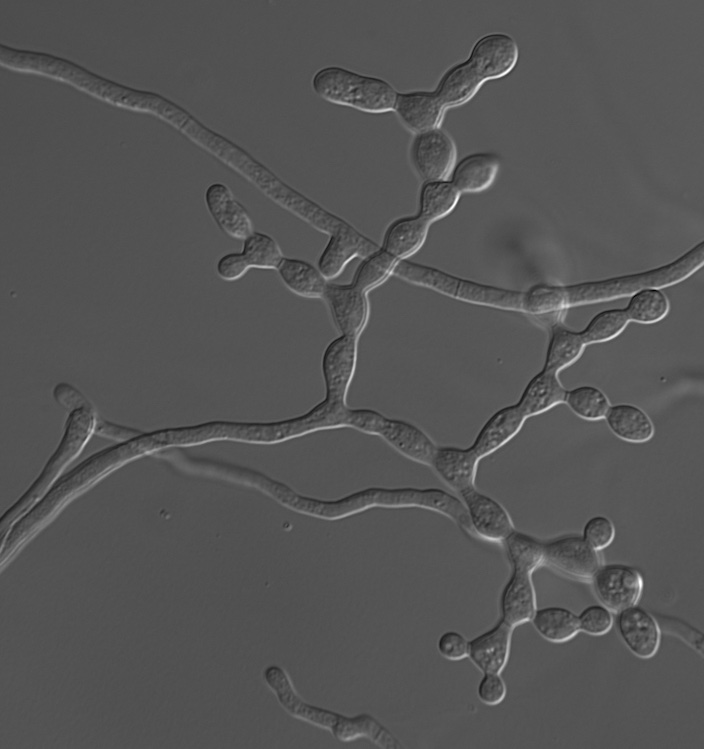
Neurospora crassa is an ascomycete with a long history as a research organism. Neurospora crassa has a well-established life cycle that allows genetic crosses; a genetic map is available with numerous markers; the genome was determined in 2003; and a collection of deletion mutants in most of the Neurospora genes is available from the Fungal Genetics Stock Center. The genome sequences of several wild types of Neurospora crassa and other Neurospora species are available from the Joint Genome Institute.
Neurospora crassa has been used to understand different aspects of eukaryote cell and molecular biology. Genetic textbooks highlight the use of Neurospora mutants in experiments that led to the one gene-one enzyme hypothesis by Beadle and Tatum. In addition, the ease in the isolation and characterization of mutants allowed seminal work that characterized the mechanism of DNA methylation, epigenetic modifications, and gene inactivation after DNA duplications during vegetative or the sexual cycle, including the proteins that participate in the RNAi pathway.
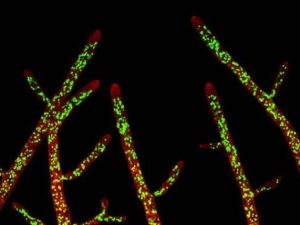
The large size of the Neurospora hyphae allows precise observations of vegetative growth under the microscope, enhanced by the availability of strains with many proteins tagged with fluorescent label for in vivo observation. In addition, the large collection of Neurospora wild-type species collected from around the world, and available from the FGSC serves as an invaluable resource for studies in microbial ecology and evolution.
Neurospora is often observed growing in the surface or under the trunk of burned trees and vegetation. The growth of Neurospora in plant surfaces is possible for the large number of enzymes that are secreted to metabolize cellulose and other plant cell wall materials to support fungal growth. Neurospora crassa has been used as a model to understand the mechanism of regulation and secretion of cellulases and other enzymes required for the degradation of plant cell wall that will help to develop novel strategies for carbon recycling, or bioethanol production using plant byproducts of agriculture.
Neurospora grows very fast (4 mm/h), and vegetative mycelia is being used by the biotech industry to develop novel materials that could replace animal textiles such as leather, and as additives to create meat replacements with fungal and plant biomass.
**************************************************************
 European Conferences on Fungal Genetics